
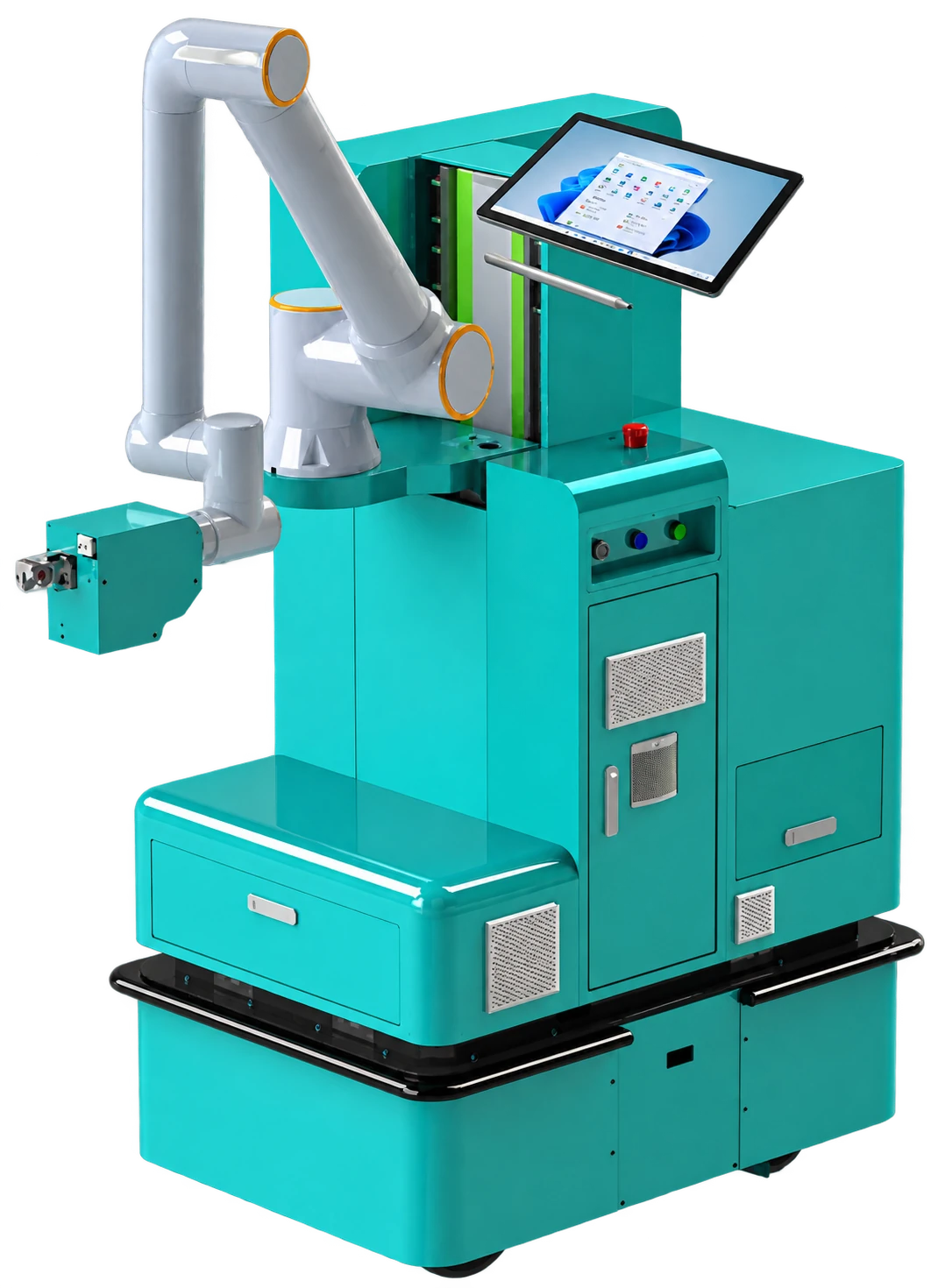
1. Match the machine to the process
A name such as “painting robot” does not specify every supported material or task. Separate the work into coating preparation, application, sanding and final paint spraying. Ask which tools, materials and setup are needed for each stage.
| Equipment | Documented process | Selection question |
|---|---|---|
| P600 Max | Latex paint spraying, plus putty spraying, scraping, sanding and dust collection with interchangeable tools. | Do you need several finishing processes, and which tools are required for your material? |
| NP320 | Indoor latex paint spraying for primer and finish coats. | Is the project focused on an indoor paint-spraying workflow? |
| Putty Plastering Robot | Automated interior putty application. | Do you need dedicated putty application rather than paint spraying or sanding? |
| Putty Sanding Robot | Interior putty sanding with integrated dust collection. | Is sanding the main task, and what surface finish and dust-handling plan are required? |
2. Check height, geometry and access
The P600 Max brochure lists a working height of 6 m and applications on walls, beams, columns and corners. The NP320 lists a spraying height of up to 3,200 mm and indoor applications including walls, ceilings, bay windows and beams. Height alone does not establish suitability for a particular room.
Share room dimensions, ceiling profiles, openings, obstacles and access routes. Check machine dimensions, floor conditions, thresholds and the space needed to move and work. Review the relevant product page for each machine’s own limits.
3. Confirm the material and finish
Putty application is not evidence of compatibility with every plaster, mortar or coating. Confirm the actual material and process rather than choosing by the product name alone.
- Provide the paint or putty product information, substrate condition and required coating system.
- State the intended thickness, number of coats, drying sequence and acceptance criteria.
- Ask whether material trials, specific tools or adjustments are needed before site use.
4. Compare output on the same basis
Do not rank machines by unrelated area-per-hour figures. Spraying, scraping and sanding are different tasks, and maximum rates differ from comprehensive workflow rates. Compare the same material, surface, coating requirement and measurement period.
The NP320 brochure distinguishes comprehensive spraying efficiency from maximum spraying efficiency and identifies the figures as laboratory data. Use project conditions and a representative demonstration to assess achievable output. Include material supply, masking, setup, cleaning and follow-up work in the plan.
Product information and next steps
This guide uses the product brochures and technical information reflected on our product pages. Review the linked specifications and confirm your project requirements with our team.